

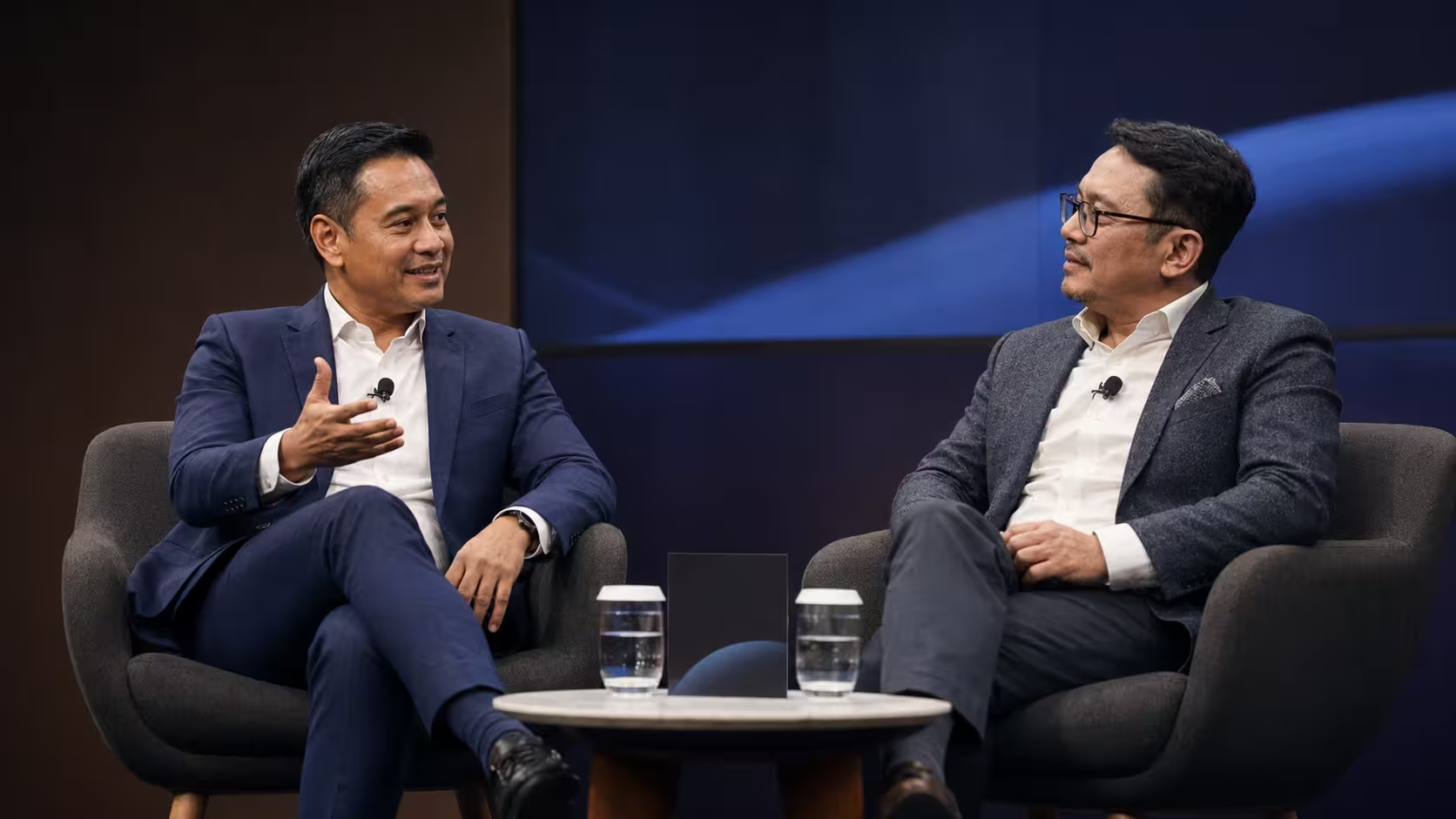
Panel discussion at VERIFY UAE
30 March 2027
,
Dubai

VERIFY UAE 2027

The UAE's dedicated event on identity, fraud and digital trust

Building the UAE's Digital Trust Infrastructure
The UAE has assembled a national trust infrastructure that now reaches across identity, payments, cards and open finance: a federal digital identity in UAE PASS, with more than 12 million registered users; instant payments on Aani; a domestic card scheme in Jaywan; and an open-finance infrastructure supporting consented data sharing and service initiation through AlTareq. The fraud economy has organised itself around the same customers. Impersonation calls, deepfake voices and mule accounts target a highly mobile population, and one in three UAE residents surveyed in 2025 said they had lost money to a scam in the previous year.

VERIFY UAE convenes the leaders responsible for that response — across identity, authentication, fraud and digital trust — in banks, exchange houses, fintechs, telecoms and digital platforms, alongside the authorities that run the national infrastructure. By March 2027 these systems operate at scale, authentication has moved beyond SMS and email one-time passwords, and institutions have real deployment experience to compare. The summit examines how the country's trust infrastructure performs as it becomes more connected: what replaced the codes, how fraud moves across sectors, and how trust holds when software transacts on the customer's behalf.
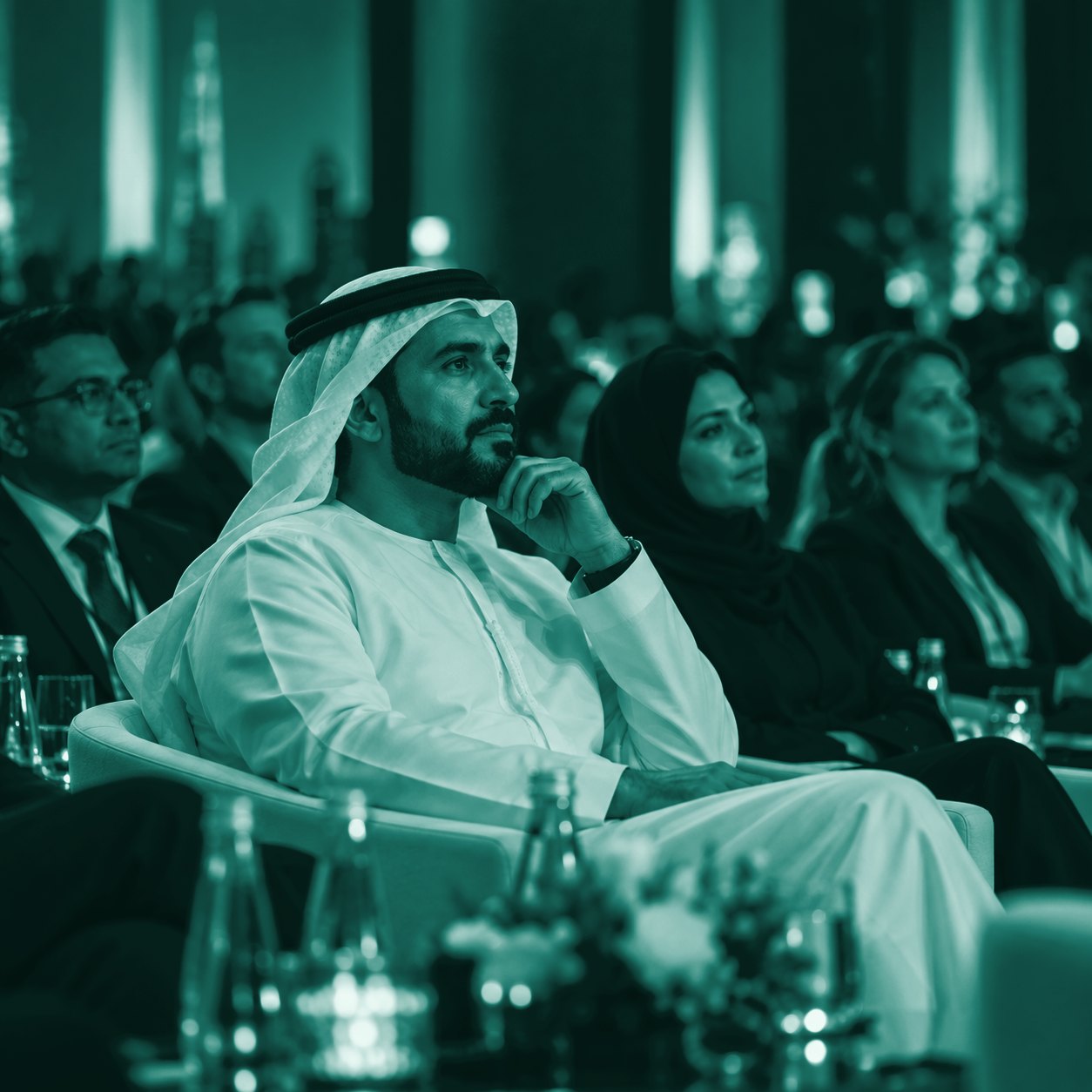
Senior delegates in the audience
Why VERIFY, why now
0 m+
registered UAE PASS users on the national digital identity
0 m+
registered users on Aani, the UAE's instant payments platform
0 in 3
UAE residents surveyed reported losing money to a scam in the previous year
0
licensed financial institutions in Aani's connectivity network
Who Will Be There
A cross-functional room of senior leaders responsible for identity, fraud and digital trust across the UAE's financial and digital economy.
ROLES

Heads of Identity & Authentication · Heads of Digital Identity · Heads of Fraud & Financial Crime · Heads of Trust & Safety · Heads of Payments Risk · Chief Risk Officers · Chief Compliance Officers

ORGANISATION TYPES

Banks & Digital Banks · Exchange Houses & Remittance Providers · Payment Service Providers & Fintechs · Telecoms · E-Commerce & Super-Apps · Federal, Emirate & Free-Zone Authorities

What Makes VERIFY Unique
Built for the people deciding who and what can be trusted.
Built around the UAE's national trust stack
Identity, authentication, fraud detection and payments were built as separate systems. In the UAE they now meet on shared national rails: UAE PASS, Aani, Jaywan and AlTareq. VERIFY UAE brings together the people building on that stack across banking, exchange houses, telecoms and digital commerce.
Built on a year of evidence, not forecasts
By March 2027, institutions have accumulated meaningful operating experience following the move beyond SMS and email OTPs. The discussion is therefore about what actually happened — what replaced the codes, where fraud moved, which customers were hardest to migrate — not predictions made before implementation.
AI-driven defence, grounded in deployment
Discussions centre on how institutions deploy AI in fraud detection, authentication and investigation — against deepfake impersonation, AI-generated scam content and transactions at machine speed: what is working in production, where it is failing, and what the next stage of the build requires.
Agenda

7:45

8:30

Registration & Networking Breakfast

    8:30

    8:35

    Opening Remarks

      8:35

      9:15

      The Trust Infrastructure the UAE Is Building: Who Owns Trust Across Federal, Emirate and Free-Zone Mandates?

      The UAE runs its trust infrastructure in layers. UAE PASS and Emirates ID operate federally; TAMM and Digital Dubai deliver government services at emirate level; the Central Bank supervises onshore finance, while the DFSA and ADGM's FSRA regulate the two financial free zones. Aani, Jaywan and AlTareq add national rails for payments, cards and financial data. Each layer was built under a separate mandate, but customers experience them as one digital journey. When something goes wrong, how is responsibility divided?
      • Federal, emirate and free-zone authorities each govern part of the customer's journey. Where does accountability sit when trust depends on all of them?
      • UAE PASS anchors identity across government and a growing range of private services. What must the bank build on top to earn trust it cannot inherit?
      • Aani, Jaywan and AlTareq give the UAE sovereign control of its own rails. How does that change who is expected to stop fraud on them?
      • Telecoms, exchange houses and platforms answer to different regulators. Who convenes the sectors when no single authority covers them all?

      9:15

      9:30

      How We Solved…

      A practical case study on a real industry challenge, the approach taken, and results achieved.

        9:30

        10:10

        Identity Assurance After the OTP: Rebuilding Authentication for a Mobile Population

        By March 2027, UAE financial institutions have roughly a year of operating experience beyond SMS and email OTPs, with authentication moving onto apps, device binding and biometrics — though not uniformly. The identity layer now carries more of the load, for a highly mobile population: new residents arrive continually and establish a local financial identity across banking, telecoms and UAE PASS, often with little local transaction history.
        • What replaced SMS and email OTPs in practice, what worked at scale, and where did fraud migrate once they were gone?
        • Where have app-based authentication, device binding and biometrics proved effective, and where did customer friction rise?
        • Synthetic identities and deepfake voice and video target remote onboarding and contact centres. Where does the institution rebuild verification without breaking the customer journey?
        • How does the institution establish confidence in a new resident who needs an account before building any local history?

        10:10

        10:15

        The Room Speaks: Morning Pulse

        A mid-morning audience pulse on the day's most contested operational questions.

          10:15

          10:45

          Networking Break

            10:45

            11:25

            The Origination Problem: The Call That Sounds Like Your Bank

            Impersonation of a trusted institution, in fluent Arabic or English, usually begins well before any money moves — so the first chance to intervene often sits with a telecom, a platform or a messaging channel. The UAE tightened telemarketing rules in 2024, requiring prior approval from the relevant authority, restricting calling hours and prohibiting the use of personal numbers for commercial marketing. But fraud is no longer something a bank can solve within its own perimeter.
            • The call or message arrives before the bank sees anything. How do e& and du intervene without becoming the gatekeeper of every conversation?
            • Scam content is becoming more convincing in Arabic. How can native-quality Arabic AI capability, including UAE-built models such as Falcon Arabic, help detect and counter it?
            • Marketplaces, delivery apps and super-apps see the fake seller or courier first. Where does the platform's verification standard meet the bank's?
            • Mule recruitment happens on messaging and social channels. Who disrupts it when it sits outside every institutional perimeter?

            11:25

            11:40

            How We Solved…

            A practical case study on a real industry challenge, the approach taken, and results achieved.

              11:40

              12:20

              Know Your Agent: When Software Becomes the Customer

              AI agents that pay and transact on a customer's behalf are moving from demonstration to deployment. In the UAE, AlTareq already lets licensed third parties initiate services with the customer's consent, and Abu Dhabi is embedding AI across government services and operations. An agent transacts faster than a person, on the instruction of someone who never touched the screen. Know-Your-Customer was designed for a person. What happens when the customer isn't the one transacting?
              • Behavioural models assume a human at the keyboard. How does the institution tell human from agent and monitor transactions at machine pace?
              • When the instruction comes from software exercising the customer's consent, how is the agent identified and its authority verified?
              • A manipulated agent could transact at scale before anyone notices. Who sets the limits, who holds the kill-switch, and how fast can authority be revoked?
              • Who is accountable when software acts under delegated authority, and what standard for agent identity does the private sector adopt before the market fragments?

              12:20

              12:50

              Prayer & Networking Break

                12:50

                13:05

                How We Solved…

                A practical case study on a real industry challenge, the approach taken, and results achieved.

                  13:05

                  13:45

                  Collective Defence: One Country, Several Rulebooks

                  Fraud moves across instant payments, card rails, exchange houses, telecom networks and digital platforms faster than any single institution can follow it, and in the UAE it also crosses the line between onshore and free-zone supervision. The UAE is strengthening collective anti-fraud capabilities: the Central Bank is establishing an Anti-Fraud Operations Centre to coordinate with licensed institutions and other authorities, and Dubai Police has convened banks, regulators and digital platforms on faster fraud response. With Aani settling transfers in around three seconds, the intervention window has become dramatically smaller. The challenge now is operational: how quickly can intelligence move across institutional, sectoral and regulatory boundaries before funds disappear?
                  • Onshore, DIFC and ADGM each have their own data-protection regime. What legal basis, governance and cross-jurisdictional processes let fraud intelligence move between institutions?
                  • Exchange houses sit at the centre of the UAE's remittance flows. How are they brought into the same defence as the banks?
                  • Telecoms and platforms see the approach first. How does signal reach financial institutions in time to act?
                  • Victims report to the police, their bank and the platform. How do reporting pathways and law enforcement keep pace with instant payments?

                  13:45

                  13:50

                  The Room Speaks: Closing Pulse

                  A final audience reflection on how perspectives shifted across the day.

                    13:50

                    13:55

                    Closing Remarks

                      13:55

                      14:40

                      VIP Networking Lunch

                        Contact Us
                        Whether attending as a delegate or exploring sponsorship, contact us to discover exciting opportunities at our upcoming events.
                        Request your invitation
                        Join senior decision-makers and industry peers for a focused programme of insights, discussion, and networking. Attendance is complimentary for qualified professionals, subject to approval.
                        Thank you! Your submission has been received!
                        Oops! Something went wrong while submitting the form.
                        Partner with Us
                        Showcase your expertise, build new relationships, and engage directly with senior decision-makers. Explore sponsorship, speaking, branding, and business development opportunities tailored to your objectives.
                        Share your insights
                        Share your experience, case study, or perspective with an audience of senior professionals. We welcome submissions from practitioners, industry leaders, and subject-matter experts with relevant insights to contribute.
                        Thank you! Your submission has been received!
                        Oops! Something went wrong while submitting the form.